
Functional investigation of internal body sensing
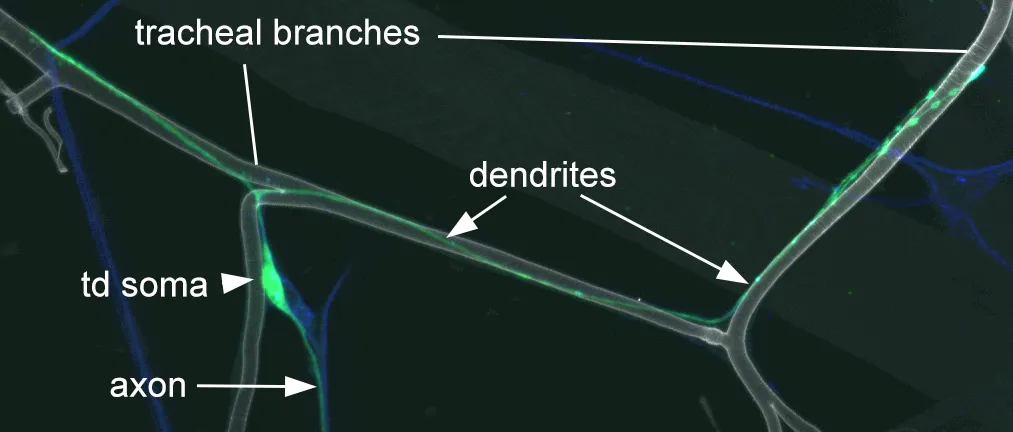
Sensing of internal body status is essential for proper functioning and homeostasis of many different organ systems, the so-called brain-body connection. We study the functions of internal sensory neurons in Drosophila larvae, focusing on tracheal dendrite (td) sensory neurons that innervate the respiratory system. We have found that these neurons project sensory dendrites across specific sections the tracheal network that acts as the insect "lung" and project axons to two regions of the central nervous system; a chemosensory recipient center called the subesophageal zone (SEZ), and a less well defined region of the third thoracic ganglion. Likely functional heterogeneity of this system of neurons is also underscored by molecular gene expression, with evidence pointing to divergent and segment specific expression of gustatory receptors, ionotropic receptors, and oxygen sensors in different td neurons along the body. We are interested in this system as a major interoceptive system that monitors diverse chemical states of the insect and are exploring this possibility using behavioral and physiological approaches. We carry out these studies expecting that they will reveal conserved molecular and circuit features of interoception that can be applied to mammalian systems.